
Pamplemousses Botanical Garden
Pamplemousses Botanical Garden, officially the Sir Seewoosagur Ramgoolam Botanic Garden, offers a different way to discover Mauritius: on foot, among towering palms, old trees and pools of aquatic plants.
The photographs below were taken by Fanny during her own visit. They show both the familiar water-lily ponds and the quieter details worth noticing along the paths. Plant growth, flowering and the appearance of the ponds can differ when you visit.
What to see at Pamplemousses Botanical Garden
The giant water-lily pond
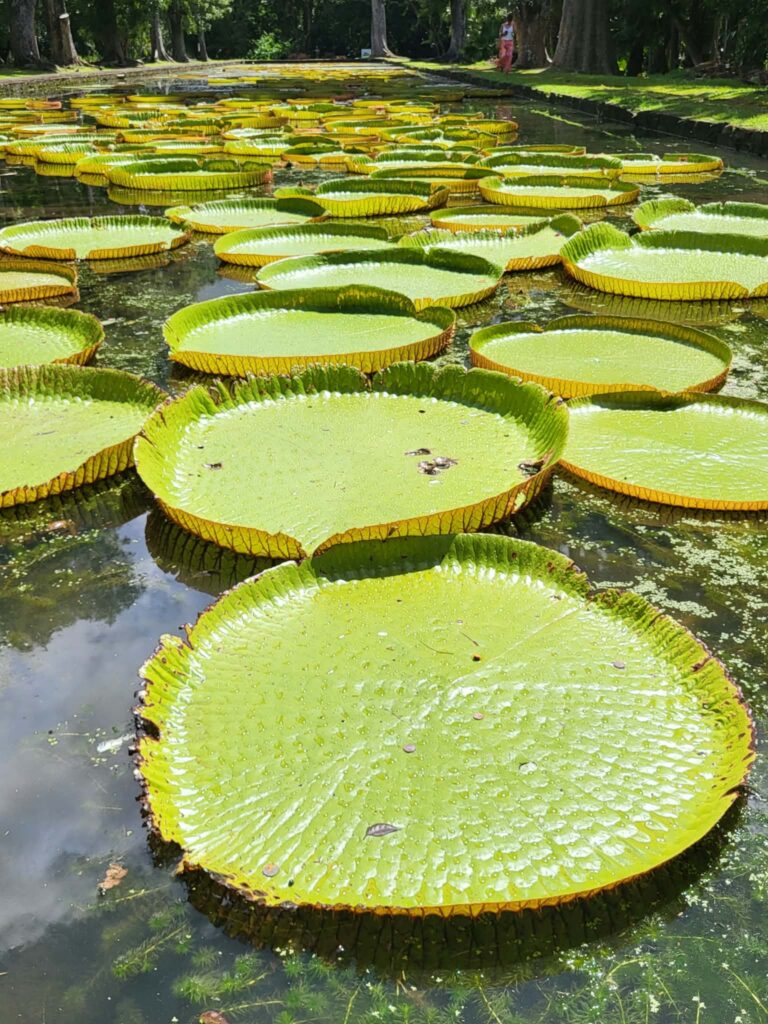
The broad, circular leaves with raised rims are a highlight of the garden. The official collection includes the Amazonian giant water lily, Victoria amazonica. Take time to look at the different sizes of the leaves, their raised edges and the reflections between them. View the plants from the pond edge and avoid touching or placing objects on the leaves.
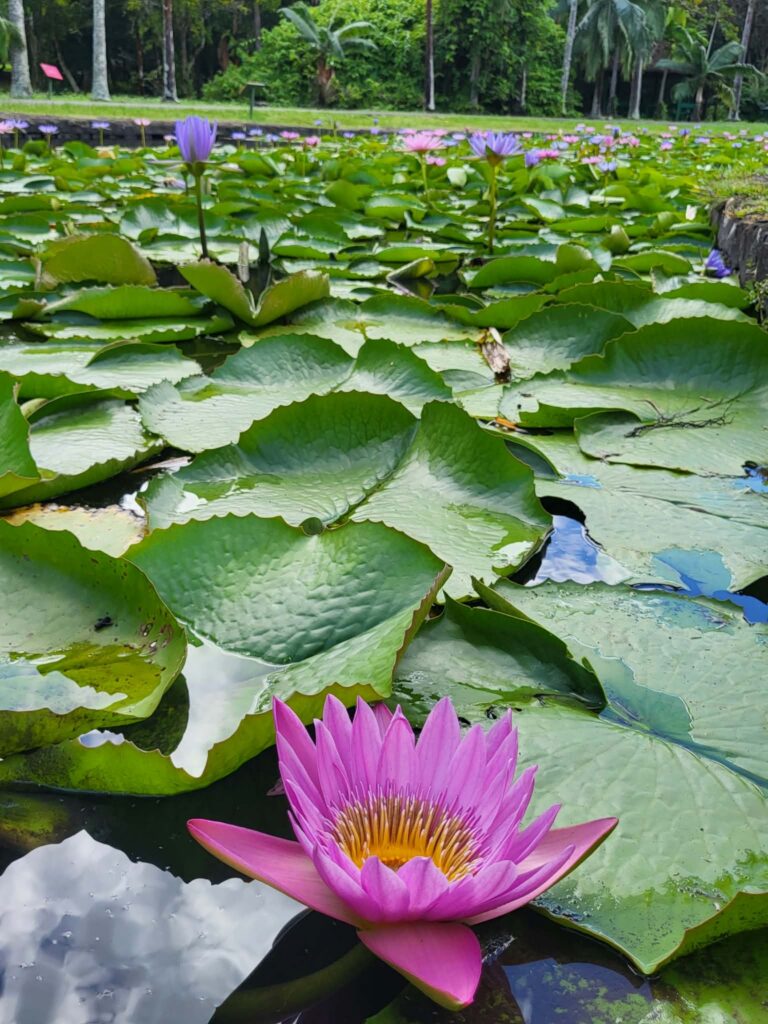
The flower photograph gives a closer view of the aquatic collection. Look closely at the petals and floating leaves: the smaller details are worth a pause as well as the wider views across the pond.
Palm avenues and the canopy above you
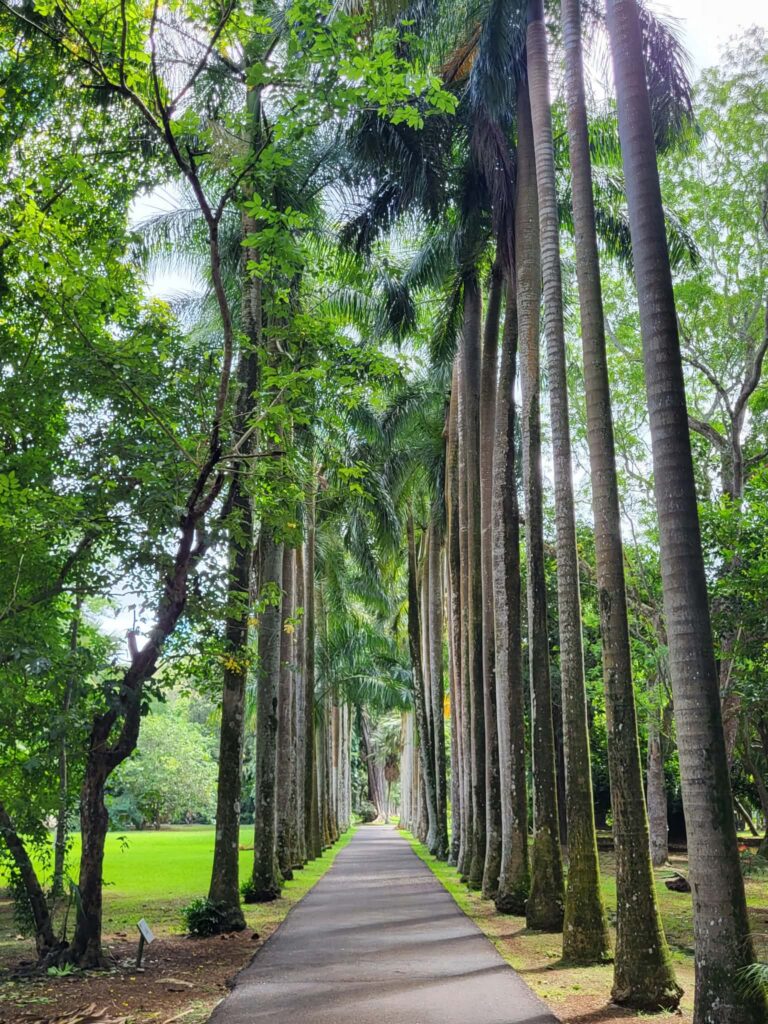
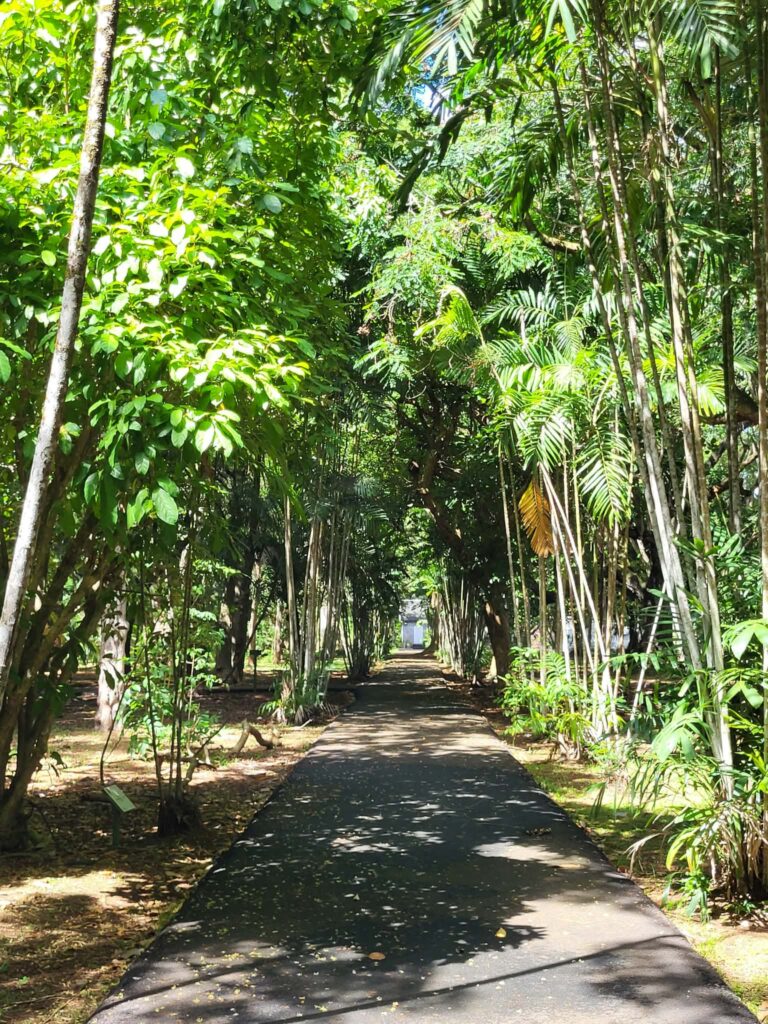
The garden’s official collection lists at least 80 palm species, including palms endemic to the Mascarene Islands. Compare the different crowns and leaf shapes instead of seeing the avenues only as a backdrop for photographs. The talipot is another notable palm in the collection; its exceptional flowering is an event in its life cycle, rather than something every visit will include.
Large trees, roots and quieter paths
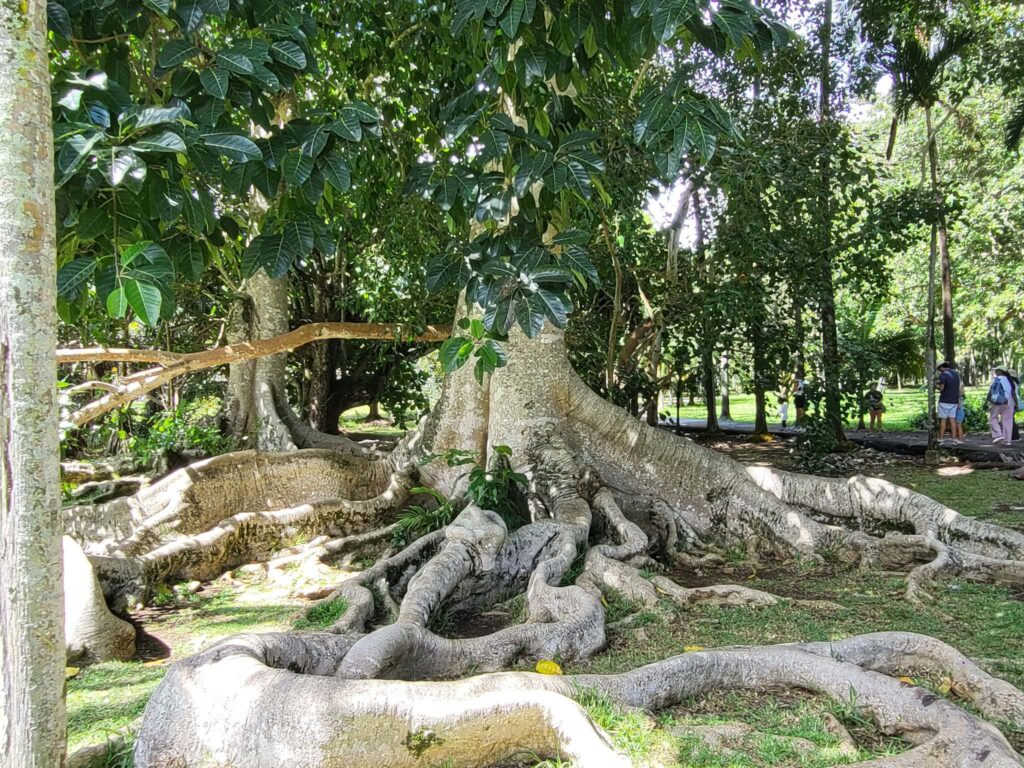
Beyond the ponds, the photographs reveal another reason to walk slowly: sculptural roots, tall trunks and changing patches of light beneath the canopy. Follow the established paths and give large exposed roots plenty of space. There is no need to identify every tree to enjoy its shape, but a plant label or a guide can help you understand what you are looking at.
A garden with a long botanical history
The garden developed on the Mon Plaisir estate, which began as a vegetable garden under Mahé de Labourdonnais. Pierre Poivre later developed its botanical collections and bought the estate in 1770. Nutmeg and clove plants formed part of his work on introducing and cultivating useful plants. Nicolas Céré, appointed director in 1775, continued building the collections. These connections between plants, trade and the island’s colonial history add context to a walk through the grounds. Read the garden’s official history of Mon Plaisir and Pamplemousses.
When to visit and what changes with the seasons
Do not plan your visit around a promise of a pond looking exactly like a photograph. In an official notice dated 17 October 2025, the garden explained that cooler conditions, typically from June to October, can bring a period of reduced growth or regrowth in the giant water lilies. Fuller leaves and flowering generally return as conditions warm, usually between November and April. This describes a seasonal pattern, not a guarantee for a particular day.
For a more comfortable walk, consider arriving early in the day and leave time for pauses. Check the weather before setting out and take drinking water, comfortable shoes, sun protection and something for a passing shower. Our guide to the best time to visit Mauritius can help you place the garden within your wider itinerary.
Practical information for your visit
- Location: Royal Road, Pamplemousses, Mauritius. Use the full official name when arranging transport, so you are heading to the right garden.
- Opening hours: the official visitor information lists 8:30 am to 5:30 pm daily, including public holidays. Confirm opening arrangements before travelling, as temporary closures can occur.
- Entrance fees: consult the garden’s official visitor information for the applicable visitor category and confirm current charges with the garden. Do not assume every nationality or residency category pays the same amount.
- Suggested time: as a planning allowance, set aside around 1½ to 2 hours for an unhurried walk and photographs; allow longer if you want to explore the collections in detail.
- Transport: plan both your arrival and return journey. See our Mauritius transport guide and find Pamplemousses Botanical Garden on the map.
A simple way to enjoy the garden
Rather than rushing from one photograph to the next, choose a few things to notice: the palm avenues, the giant water-lily leaves, a flowering pond and the forms of mature trees. Ask at the entrance about current routes, any closed areas and guide availability. If you take a guided visit, confirm the duration, language and price before agreeing.
Travelling with children? Turn the walk into a gentle observation game: compare a round leaf with a fan-shaped one, look for reflections and notice how the shade changes. Keep children close beside the water. If you have mobility requirements, contact the garden about current surfaces and the route that best suits your needs rather than assuming every path is equally accessible.
FAQ
Is Pamplemousses the same as the SSR Botanic Garden?
Yes. Pamplemousses Botanical Garden and Sir Seewoosagur Ramgoolam Botanic Garden refer to the same garden featured in this guide.
Will I always see giant water lilies in full growth?
No. Their appearance depends on seasonal growth and current conditions. Use the photographs as an introduction to the collection, not a promise of how the pond will look on your visit.
Can I include the garden in a wider Mauritius itinerary?
Yes. Leave enough time to enjoy the walk and organise transport for the rest of your day. Explore our nature and park guides for other outings, and our Where to Stay in Mauritius guide when choosing a base for your holiday.
Plan more of your Mauritius trip
Continue with our Mauritius destination guide, browse excursions and places to explore, or compare accommodation options around the island.
Practical information checked on 8 November 2026. Sources: SSR Botanic Garden visitor information, palm collection, ponds and the Grand Bassin, garden history, and the garden’s notice on seasonal water-lily growth. Opening arrangements, fees and the condition of collections may change. All five photographs: Fanny / Indian Ocean Waves.